▪︎January 7th marks the anniversary of the Georgetown- IBM Experiment, demonstrating the potential of machine translation.
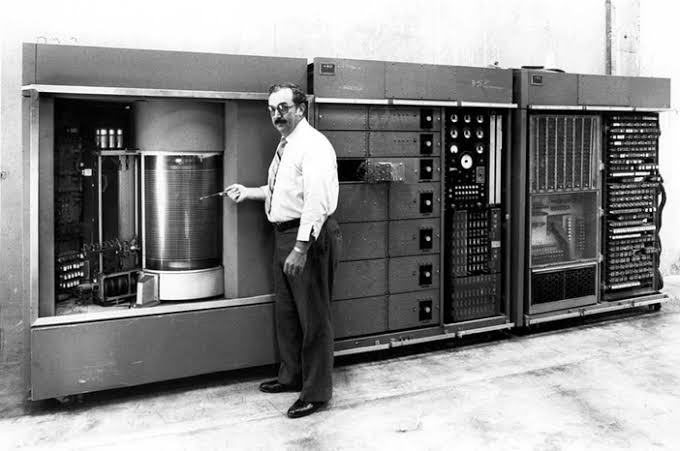
▪︎ Developed jointly by the Georgetown University, Washington D.C and IBM in 1954, the experiment involved completely automatic translation of more than 60 Russian sentences into English.
▪︎ The translation was carried out using an IBM 701 Mainframe Computer and as required then, sentences were punched onto cards.
▪︎ The 1954 experiment was perceived as a success and encouraged governments to invest in the field of ‘computational linguistics’.
▪︎IBM and Georgetown University claimed that within three to five years, machine translation could well be a solved problem.
▪︎ However, the real progress came much later with further advancements in Artificial Intelligence.
▪︎ At a basic level, machine translation performs mechanical substitution of words in one language for words in another, but that alone rarely produces a good translation.
▪︎ The problem arises because not all words in one language have equivalent words in another language, and many words have more than one meaning.
▪︎ There are more than 7,000 languages, and each has its own quirks. Every culture has its own sayings that only make sense when explained in right context.
▪︎ Nevertheless the quality of machine translation has substantially improved, and many fully automated systems are now capable of producing reasonably acceptable output.
▪︎ Unless artificial intelligence progresses at lightning speed in the next decade, it’s unlikely that machine translation software will ever be able to match well nuanced human translation.

 ON THIS DAY