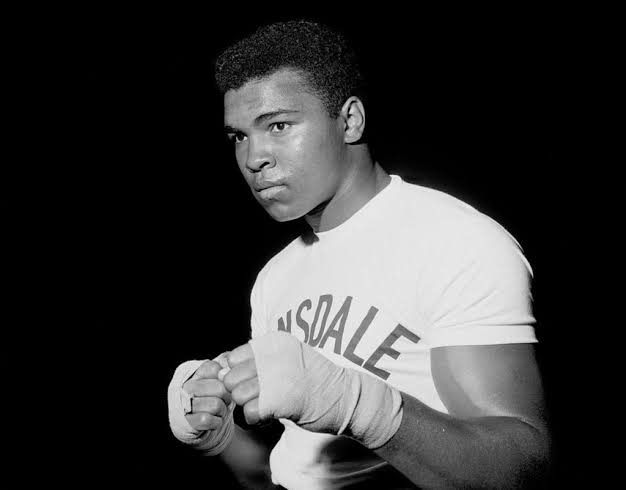
Muhammad Ali, without doubt, has been the greatest brand ambassador of Heavy Weight Boxing. Ali was the first fighter to win the World Heavyweight Championship on three separate occasions. He defended this title 19 times.
Through his boxing career he was also known for his social message of black pride and black resistance to white domination. Post retirement he attained fame through his philantropic work.
Born on January 17, 1942 as Cassius Clay at Louisville, Kentucky in the American South, he took up to training as an amateur boxer at age 12. He grew up in a family of limited means, at a time of segregated public facilities for Whites and Blacks. His father was a billboard painter, and mother a domestic help.
After advancing through amateur ranks, Clay won the Gold at the 1960 Rome Olympics, and thereafter began a professional career in Heavy Weight Boxing.
On February 25, 1964, Clay pulled out a stunning upset in sports history defeating the reigning heavyweight champion Sonny Liston, who was renowned as the most intimidating and powerful fighter of his era.
Two days later, Clay announced his conversion to Islam, guided by the teachings of his spiritutal mentor Elijah Muhammad. He soon took the name Muhammad Ali, renouncing what he called his earlier ‘slave name’.
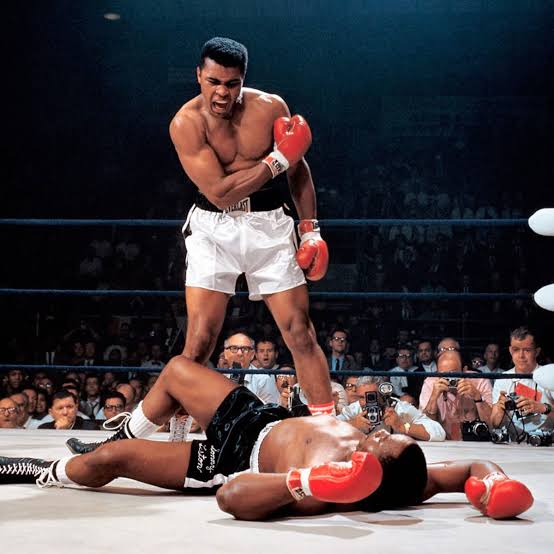
For the next three years, Ali dominated boxing as thoroughly and magnificently as any fighter ever had. In a 1965 rematch, he knocked out Liston in the first round. In his bout against Cleveland Williams in 1966, Ali landed more than 100 punches, while he was hit a total of three times.
Muhammad Ali achieved renown as a boxer through his speed, superb footwork and tremendous courage. While his boxing skills were applauded universally, many disliked his frequent bragging about his achievements.
In 1967, citing his religious beliefs, Ali refused induction into the U.S. Army at the height of the war in Vietnam. He was stripped of his championship and barred from fighting by every state athletic commission in the United States for three and a half years.
In October 1970, Ali was allowed to return to boxing, but by then his skills had eroded. His reflexes, while still superb, were no longer as fast as they had once been. He fought big names like Joe Frezier, George Foreman and Leon Sphinx with mixed outcomes.
Ali’s later years were marked by physical decline. Damage to his brain caused by blows to the head resulted in slurred speech, slowed movement, and other symptoms of Parkinson syndrome.
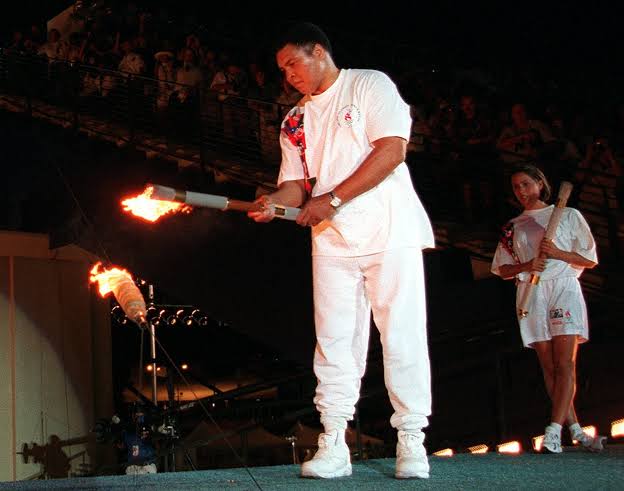
It was a moving sight to witness Muhammad Ali, arguably the swiftest boxer ever, light up the 1996 Atlanta Olympics flame with his shaking hands. That memory is still green in my head.
In 1999, he was named Sportsman of the Century by Sports Illustrated and the Sports Personality of the Century by the BBC. On June 3, 2015, Muhammad Ali breathed his last.
MD/ BPost/X

 ON THIS DAY